06) The “Divided Legacy” of Medicine

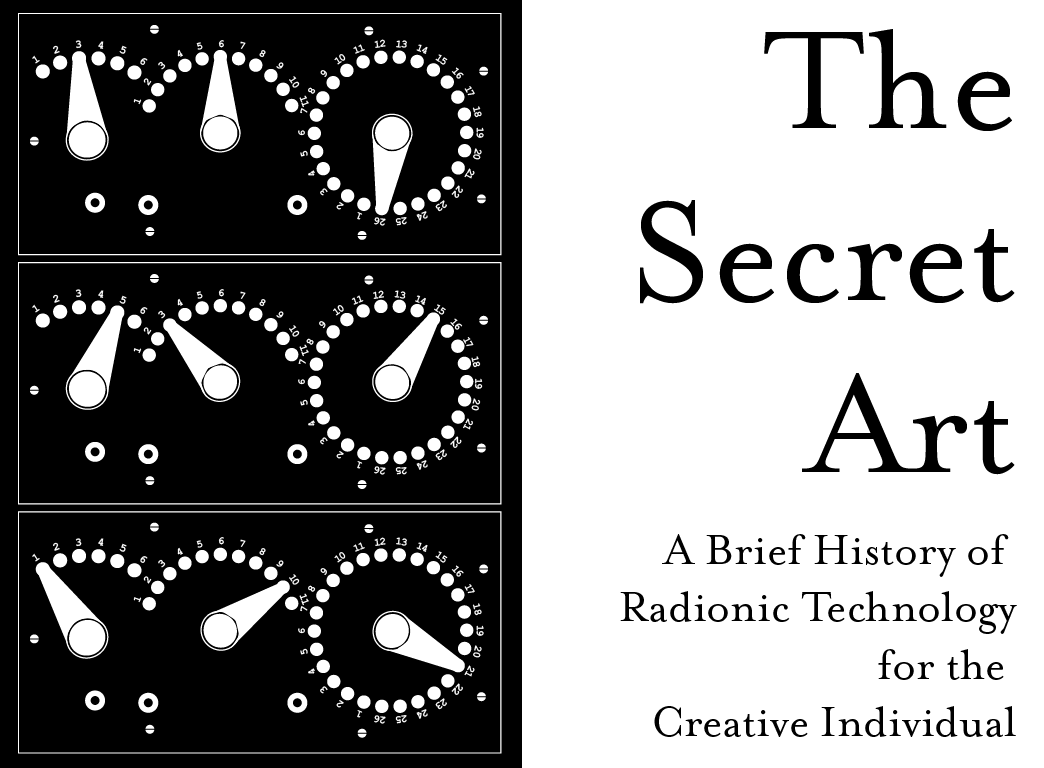
The invention of Radionics in the early decades of the 20th century by Dr Albert Abrams, A.M., LLD, M.D. was considered by many to be one of the most important medical discoveries of that time. Before revisiting this fascinating period and the circumstances surrounding the origin of Radionics, it is important to have some concept of the intellectual climate surrounding this discovery.

Not long before, in 1897, Sir J.J. Thompson had just discovered the electron. A few years lather, Sir Ernest Rutherford had shown that all atoms consisted of a central nucleus surrounded by the constant movement of electrons. The study of electronics was in its infancy, but already the Electron Theory had demonstrated the electrical nature of matter. By the early teens, Marconi was stating "We are just entering what may be called the field of vibrations, a field in which we may find more wonders than the mind can now conceive."

Einstein was immersed in formulating the theory of relativity. Cezanne was laying the foundations for abstract art. Automobiles were appearing on roads and airplanes were staying in the air. 'Heroic' medicine, the forefather of modern allopathic bio-medicine as formulated by Benjamin Rush and others, was busy lancing, leeching, bloodletting and poisoning its way to the forefront of contemporary healing.

At the center of the medical controversy of this time was a conflict going back to the Hermetic Tradition of Paracelsus, generally recognized as the founder of modern scientific medicine. Was disease was to be treated through the introduction of chemical substances, or was the patient to be restored to a state of harmony, whereby the life force unimpeded by blockage, would heal the body by itself?

‘Heroic’ medicine prevailed, through adapting itself to and incorporating new scientific discoveries. Significantly, germ theory that relied upon a plethora of new technology arising from the study of optics and electronics came to the forefront of medical thinking. By contrast, competing medical approaches like Radionics, seemed more to resemble sympathetic magic.

Returning to Steve Mizrach’s article "Medicine On The Fringe", consider the origins of the conflict facing medicine around 1910.

"In order to understand the disputes between 'orthodox' and 'alternative' medicine, one needs to consider the problem as resulting from what the medical historian Harris L. Coulter calls a 'Divided Legacy' in medicine stemming back for perhaps 2000 years, that is, a continual conflict and give-and-take of what he calls Empirical and Rationalist approaches." Coulter sees Empirical medicine as being based in induction through direct, concrete observation and experimentation, whereas Rationalist medicine is essentially deductive, searching for logical, abstract, a priori procedures for dealing with disease. Homeopathy, (and by comparison, Radionics), he suggests, is Empirical, based as it is on a careful elicitation of a patient's entire life history and a drawing upon of the doctor's own experience. Biomedicine is Rationalist, assuming that the doctor can treat the problems of the patient through his training and a formal, logical, procedural method.

"Coulter notes that, over time, as healing ways become more professionalized and systematized, they face pressure to become less Empiricist and more Rationalist. He suggests that allopathy started out as a more Empirical system, but that various forces, especially efforts to professionalize (the Flexner Report creating a standardized curriculum for medical education and establishing the central role of the AMA), resulted in it moving over to the Rationalist axis. Coulter points out that as alternative medical systems like homeopathy [and by analogy, Radionics, ed.] try to emulate the success of allopathy, they inevitably face the dilemma of losing their empirical foundations."

The schism that has pursued the philosophy of medicine for the last 2000 years, the Rationalist versus the Empirical, was very much in play during the early 1900's when Radionics was first discovered. In fact, the resulting controversy over Radionics presents a vivid picture of the transition modern medicine was making at that time from Empirical to Rationalist. An immediate conflict appeared as Radionics sought to use electronics to conduct an unknown biological energy. Radionic technique required the practitioner to be something of an artist, projecting the doctor’s considerable healing skills into a subtle, mind sensitive instrument. However, to make these techniques palatable to others, Radionic devices had to mimic machines rooted in procedural method, explainable in the scientific terminology of the day.