INTRODUCTION
In a series of recent New York Science Times articles, radical new ideas about the nature of our universe have been presented that could affect the way we view megalithic culture and stone monument design. When new, accurate measurements proved the universe is accelerating, when in fact gravity should be slowing it down, an idea once discarded by Einstein called the “cosmological constant” was resuscitated. The theory demonstrated how subatomic particles at the quantum mechanical level going in and out of otherwise empty space could exert an anti- gravity force upon ordinary matter, thus explaining the acceleration. This invisible “dark matter” or “quintessence,” as it is often called, is said to comprise 90-99% of the “missing” mass of the universe. As such, the door was now opened to the scientific possibility of parallel universes, subtle energy transactions and a host of other possibilities normally reserved for science fiction and mystical studies. For those fascinated by megalithic culture, the thought that these monuments might have an energetic component to their design based upon some aspect of subtle energy or universal life force could at last be contemplated in context of a larger, cosmological scientific theory. But what might “subtle energy” actually be in the here and now, and how could it influence design hundreds if not thousands of years ago?
Science increasingly relies on descriptions of the invisible world and events that occur there as being phenomena of “energy” of various forms. Some of these energies do work, like carrying radio waves and data. Others are more truly of the mind, such as the geometry within form, or higher mathematics. Sometimes they are both, like the vibrations sensed by dowsers through their twigs and wands. Some energetic constructs such as dreams and visions can be overwhelmingly real to the viewer, but completely lacking in physical substance. The famous Swiss psychologist Carl Jung called the most vivid of these phenomenon archetypes. He described archetypes as autonomous, mythic components of the collective unconscious that ranged freely without obstruction across all times, cultures, and individual minds, usually resulting in definitive psychological and spiritual growth in those encountering them. As such, these experiences have become the very stuff of legend, myth, and mystery.
In the broadest sense, ancient stone structures lying desolate in forgotten corners of the Eastern wooded landscape or anachronistically thrust among cityscapes and urban sprawl as they occasionally have remained, are by themselves something of an archetypal construction, especially for the materialistic and rationalist culture in which we live. Before one even considers what role they play in relationship to “earth” energy, whether applied or mystical, it should be noted they are already as much a part of our mythical landscape as our forests.
If Jung were writing on this topic today, he might say these stones were “charged” by the very mystery of their origin and purpose. The charge grows in contrast to our increasingly synthetic society. The fact that astronomical alignments to other monuments in their proximity obviously exist only adds to their archetypal potential and fascination. It is conceivable that their very potency is what has alienated them from useful academic study. The rationalist, mechanistic world view that dominates our thinking today fought a long, hard battle against this very same primitive earth magic in our comparatively recent past. It wasn’t so long ago, historically speaking, that people who were found hanging around things like dolmens and stone caves in these very same woodlands were burned for witchcraft.
There seems to exist both historically, and in our present context today, ample reason to respect these mysterious sites “energetically.” Something asks us to allow them to beif only for our imaginationsomething other than just piles of stone. What I would like to suggest in this article are ideas and research that will allow us to view them as much more than mysterious symbols of the unknown. I will argue that as monuments, artifacts, and landscape designs, they retain a description of other very powerful natural forces as yet unmeasured or adequately considered that were apparent to their builders but are lost to us today.
To explore this hypothesis it is necessary to consider something of what other researchers have found that could enhance an examination of these sites. One topic explored will be the actual energies invoked in crossover situations from the physical to the mental to the spiritual. Another will be how, once these energies were discovered, they could have been manipulated and used in a pre-technological context. A third consideration will be the purposes or benefits that a society or culture would occur in so doing. Naturally, my observations will only be a sketch, something for the researcher to consider.
THE ANCIENT WORLD
Imagine a world without electricity, the security of four walls, a ceiling and floor with which one can shut out the world. Imagine little food, cold, insects, no guaranteed comfort or distractions. Imagine large predators, tremendous uncertainty about day-to-day survival, and a relentless darkness once the sun set in the sky. Imagine the subconscious longing for these comforts that are so natural for us today. Then imagine the powers of concentration and consciousness that one must summon to offset the lack of these things. Imagine this consciousness as finely tuned to the subtleties of light and shadow, temperature, smell, sound and pattern. Imagine an instinctual awareness that exists at one moment in three dimensions and a split second later in moreperhaps as remote viewing, or being telepathically linked with animal, plant and spirit. Imagine being surrounded by living metaphor in a landscape of impossible symbolic potential. If you can imagine this possibility, then you have probably experienced something of what indigenous peoples have reported to anthropologists as being part and parcel of their normal life.
Buried among all the input of imagery and sensation are responses to signals generated by the earth itself. Certain spots on the landscape are said by many cultures to diffuse energy in great profusion; spots marked with stones, which become altars, then structures with rooms becoming temples, churches, cathedrals. Such spots seem to resonate with much more power at certain times of the year. Other markers are placed on the landscape to measure and predict the occurrence of these energetic events with the position of stars, sun and moon. Surges of such energy are observed to promote healing, fertilization, visionary immersion, prophesy, and the acquisition of personal power, and become preparatory stages for hunting, war, planting or migration. Everything is energetic, like the physics of today. All activity, physical or psychic, is part of a seamless topography
This is not the author’s imagination. This is a composite of many voices of many persons speaking from many cultures about a world view that is not dissimilar to that of the culture responsible for the stone works of New England and beyond. This is the world of the Australian aboriginal that encodes complex information regarding food and water availability across the terrain onto patterns of swirling dots drawn in the earth. The drawing, we are told, triggers an altered stateDreamtimein which the physical landscape becomes an eidetic landscape of the mind, a full-blown imaginal map with instructions and information from the last traveler.
It is a world familiar to the Hopi tribal dancer who within a few hours pulls in a weather front of rain to a land rarely getting more than six to eight inches a year. In a different form, a Navajo medicine man constructs an elaborate drawing of colored sand on the ground to cure a disease or heal a torn spirit. Anywhere one pursues the question of “energy” within an indigenous context that has not been deconstructed by modern cultural imperatives, the trail leads to the existence of an a priori medium through which mind coupled with intentionality affects the outcome of events. It is as though the practitioner of this art is able to address the very molecular or atomic patterns that consist, at that moment, of consensual reality, and shift it to suit their needs.
If one can come to accept the existence of the possibility that a substrate to physical reality exists that is deterministically altered and influenced by human intention, coupled perhaps with powerful telluric forces, then much of the mysterious and irrational nature of the design objectives of the pre-historic world becomes comprehensible. Lines that go nowhere, like the Nazca plain in Peru, or the New England stone walls that go half way up a hill and stop cold, become viewed as something more than landing fields or sheep pens. Rather they are seen as an incisive design technology seeking to alter an energetic pattern binding some aspect of reality. It could be a simple exercise of control. Is this not what all ritual burials propose to effect by their elaborate architecture and symbolism? Is it outrageous to think that a culture that believes it can influence the outcome of events following death would apply the same techniques to living systems?
As artists we call upon and provoke such energetic displacements all the time. What type of energy does a work of art broadcast that gives it the power to affect people across time and space and culture? From what hidden telluric domain does the Flamenco guitarist summon the spirit of Duende that permeates and vitalizes his music, but never occurs in public, only in the intimacy of the artist’s private world? What energy does that universal purveyor of bounty and good will, the cook, summon and magically invest in food? Everywhere we look, even among the most rational and rigid of empirical minds, energy transactions are being made that cannot be explained by physics, chemistry, and biology alone.
The point is that in different ways we all use some mysterious “energy” to accomplish tasks and circumvent the rational world of limitations set by the way we normally learn, believe and act. So what is this so-called energy, anyway?
SUPERSTRING THEORY AND DARK MATTER
Today, scientists call this missing energy “quintessence,” or “dark matter.” Without it, they cannot account for about 90% of the mass of the universe. Dark matter, they tell us, is a form of light from a parallel world. It is mass which neither emits nor absorbs visible light here, but does exert gravity. This additional gravitational force, which repels rather than attracts matter, is present throughout the universe, even in vacuum, and is deemed responsible for an acceleration of the expansion of the universe.
Germane to the concept of quintessence is another, more extraordinary aspect of what is called Superstring Theorythe attempt to unify all forces and matter in the universe. It is called “Brane” theory. Brane theory proposes that our universe is one of many membranes that “float” in a multidimensional megaverse. Put simply, Brane theory posits that a particle, a graviton, might seep across the divide between universes. Dark matter, therefore, is just ordinary matter concentrated on other Branes where its light cannot shine through from one world to another. According to Superstring Theory, “the universe at its most basic level consists of tiny loops of string that vibrate at different frequencies. Since matter can be described in terms of energy, each frequency (energy) corresponds to a type of particle (matter), just as different frequencies coming from violin strings produce different notes.”1
So finally we have it from credible scientists that ever present in our world is energy from other worlds which can impact us, but which we cannot see with our eyes. This “dark matter” is a form of invisible light that clings, via photons, to the surface of a world just beyond the conscious level. This is now what scientifically accepted cutting edge theory expounds. For our discussion, it serves as a metaphor to examine how, under certain energetic conditions, manifestations of another world may enter consciousness, not necessarily as matter but as a mass free form of light. Could this light also be the light of visions, dreams and manifestations associated with sacred sites and practices throughout the world and history?
The sacred element of the ancient world is largely incomprehensible to us now. With electronic saturation and media input from every direction, we cannot possibly know what it felt like to be a person living in those forests and fields day after day, month after month, year after year. Night must have been singularly haunting and mysterious.
Recent writers on subtle energy have brought attention to what has in the past been called “black radiance.” Subjectively, black radiance, or dark light, can be seen in the shimmering emanation that is felt in the darkness around a bright streetlight, or in the void between the stars in a night sky. It generates feelings of awe, almost a living presence of space. It has also been called the plenum. Subjectively, the older concept of a plenum brings to mind the theoretical concept of dark matter, the missing mass of the universe, just discussed. Little laboratory research has been done on dark light, however, since Sir William Crookes [1832-1919] and others were debating various theories of light propagation at the prestigious Royal Academy of Science in London. Crookes was an afficionado of Baron von Reichenbach and Goethe, who both believed that the physical world was supported by an “astral” space within it that was free of inertia. Crookes designed electrostatic devices in order to shear inertial space apart. The Crookes Tube was designed to investigate these effects, which led to the discovery of dark space, a region where all luminosity ceases, being replaced by a spreading black radiance.2
The crux of the Crookes experiments was to demonstrate that this dark light would produce enough pressure to turn a vane sealed in a vacuum tube, thus demonstrating a different motive component to ordinary light. Much controversy surrounded these experiments, with other scientists claiming a gaseous force at work. It was not until Nikola Tesla, the inventor of AC current, interceded that the feat was accomplished. He managed the generation of light forms that were invisible, penetrating, and astral. Through the white fire discharge of the Tesla Impulse Transformer, Crookes was finally able to see the black radiance in free air without the vacuum tube around it.
We are prone to think that forgotten laboratory experiments of this kind have little actual bearing on day-to-day life. Yet the existence of this black light within the laboratory, described in both energetic and otherworldly terms, may reveal something about the source of luminous experience. That human beings have been trying to engineer more of this energy into their lives for a long time is apparent. Crookes wanted to see into the world of the dead with it, and maybe the early Native New Englanders did, too.
Dark light has a magical, sacred quality that can be sensed and felt today, in spite of the many inventions we have created to drive it into the background. In the days of pre-history, one can only imagine the power of this blackness and how it must have been revered and respected. For primitive man, faced with this shimmering, intense darkness, there was only one mitigating forcecelestial light. Sun eradicated its mysterious presence and brought warmth and organic growth. But at night, only the lights of the night sky moon, stars, aurora borealis and shooting starsbrought beauty of a recognizable and gentle kind. Even fire, with its heavenly analogue of lightning, was a violent and consuming force by comparison.
These gentle lights, objects of reverence and beauty, have evoked an entirely different spectrum of feeling. Could what is sensed in the deeper moments of introspection be summoned by their presence in the night sky? As these stars, and planets, and the moon in its various phases, and heroes and events of everyday life came to represent specific feelings of reverence associated with seasons and myths, it would seem only logical that cross associations, one to another, be drawn. That all these associations be clarified and personified by shrines, connected by lines of sight and lines of stone to and from each other, seems only too plausible.
ORGONE, PARAMAGNETISM, AND OTHER INVISIBLE FORCES
Once we can begin to accept the possibility that Science has opened itself to the point of accepting the existence of potent, but as yet generally unmeasurable cosmic forces such as the existence of intimate parallel worlds, it is time to step into the domain of thought that gives them ulcers. This arena is the place that these otherwise inaccessible energies become intimate to our lives, i.e., engineerable and observable by simple, often technically unsophisticated means. That such a possibility may exist now and may have existed for millennia is just another version of Science wearing the Emperor’s new clothes. Nothing seems to bother the modern intellect more than the possibility that certain early societies may have actually obtained wisdom capable of expanding their technical ability and then chosen to keep their lives simple and materially unsophisticated anyway.
Just as Sir William Crookes and Nikola Tesla came to terms with one possible manifestation of dark light, contemporary researchers such as Eric Dollard have also used similar research to generate extremely anomalous events that have a rather circuitous connection to megalithic art.
Eric Dollard is a self-described “wireless engineer,” who has spent a lifetime researching Tesla’s work. Dollard has discovered that the Tesla Magnifying Transmitter coverts electromagnetic energy into what is called magneto-dielectric energy. This form of energy impacts or stresses what in the 19th century was called “Aether,” and more recently “Orgone” by Wihelm Reich, who will be discussed shortly.
By pulsing low pressure gas (in a large bulb) with two superimposed dielectric fields (a current of many amperes flowing through free space without any electrons), Dollard was able to produce brilliant spiral formations resembling galaxies in full color within the gas of the bulb. In addition, he has caused large, organically-shaped sparks to be drawn off even the insulators on the apparatus. Dollard explains the nature of this phenomenon as basically representing the Golden Ratio spiral. (1 to 1614: phi, an important proportion of sacred architecture)
• In his own words he explains:
“Now this is also the same shape that living objects form and you find that all discharges, in general, of potential energy will try to form this shape. You can see it in water patterns, in sand, and patterns in clouds in the sky. The patterns appear over and over and over again, just like the organic patterns burned into wood by the discharge of my Tesla coil. This is converted with the orgone right there. This type of monopolar electricity is in such a form that it will grow into organic patterns a prelife pattern from the Aether itself. Any type of energy like this, such as a stream flowing down the side of a mountain, a crack in a piece of window glass, or fresh water percolating up through the sand, all make these organic patterns based on the Golden Ratio. Any time you have energy discharging, you find this type of pattern. You can say there is a shape in space that is the log periodic spiral. It doesn’t exist in a tangible form, because it is something that grows and decays. Its size fits the wavelength and frequency of the amount of energy to be discharged. It’s not like you can map space to see this particular spiral, but if you release energy into space then the spiral will appear.”
Dollard is basically saying that the log periodic spiral, familiar to us as a universal petroglyph motif (and seen, for instance, to great effect all over the stones of New Grange, Ireland), exists as a type of energy template in a pre-physical domain. As such, this Golden Ratio spiral may be an important piece of an incomplete puzzle that reveals how invisible energy becomes form.
It has been explained to me that inventors like Dollard and others have rediscovered components of Tesla’s work that were lost or misunderstood. The conjecture is that if unexplained energetic effects are currently being discovered by researchers with minimal means at their disposal, it could indicate that areas outside of established scientific inquiry still exist, even within highly scrutinized disciplines like electromagnetic theory. If some of these alternate energy sources were engineerable by simple means, then they may have been accessed by early cultures.
If Tesla’s visionary genius was in part a product of his own experimental research into subtle energy, then it certainly worked. Of course, today we are talking about fringe technology and some very atypical investigations. Yet the topic of cultural diffusionism is hardly treated much differently. In this discussion it is difficult to ascribe much more than anecdotal significance to such technology, especially as far as it pertains to the world of the ancient builder. In an odd way I find the two worlds of research reaching out to one another, as though each could in some way validate the experience of the other.
One more readily accepted scientific study that is hardly less controversial should be mentioned in this regard. It involves the effect of low frequency, low amplitude energy bursts given off by tectonic plate activity. Is it possible such a wave could completely alter the cognitive reality of man without impacting the natural world around him?
According to Dr. M.A. Persinger, a psychologist at Laurentian University, Ontario, who, with other researchers, is studying the psycho-physiological effects of extremely low frequency electromagnetic fields, it can and does. They have hypothesized that certain biobehavioral effects like religious visions and UFO experiences, followed by amnesia, lost time and shock, could be evoked through current induction within the observer’s brain. Initially, Dr. Persinger studied geophysical anomalies like tectonic plate activity and seismic strain, which can produce luminous plasmas with very intense magnetic field boundaries. These, he discovered, can also affect temporal lobe structures by modifying consciousness, perceptual processing and memory. As a result, Dr. Persinger decided to recreate these conditions in his laboratory.
To duplicate the effects of these magnetic fields on the brain in the laboratory, he outfitted a motorcycle helmet that was studded with solenoids. The helmet allowed, in conjunction with a specially written computer program, a weak magnetic field to be shaped and vectored at various points painlessly in the brain, particularly the temporal lobe. The result was vivid mental imagery. “Moreover,” adds Persinger, “the experience will be perceived as extremely real, because those functions of the temporal lobe that are recruited are the same ones that assign meaning and significance to experience in the first place.”3
Test subjects began to experience numinous imagery associated with different stimuli. Much of the stimulated material was deeply personal to the subject and carried the weight of cosmic contact in its numerous permutations. “By stimulating the temporal lobes,”Persinger says, “we had achieved a widening and deepening of the emotion they associated with the experimental experience.” After a few sessions, very little stimulus was needed to trigger an altered state. Repeated mini-bolts from the helmet could actually alter the biochemical structure of the neurons to the point where almost no stimulation at all was required to induce the altered state.
It would be interesting to know how many stone chambers and other sites lay near areas of regular tectonic activity. Mavor and Dix make reference in Manitou to the ancients’ fascination with sounds and lights produced by piezoelectric displays, erecting manitou stones as markers to these places and events.
This discussion of anomalous atmospheric energy leads to the work of Wilhelm Reich. Reich discovered the existence of an a priori form of weightless, invisible energy he called “orgone,” after organism. Reich’s discovery of cosmic orgone energy contains many and varied potential sources of insight for the researcher into megalithic art.
I quote Dr. James DeMeo, a pioneer of contemporary orgone research, to provide the reader with a precise definition of what this energy is:
“Orgone energy is cosmic life energy, the fundamental creative force long known to people in touch with nature and speculated about by natural scientists, but now physically objectified and demonstrated. The orgone was discovered by Dr. Wilhelm Reich, who identified many of its basic properties. For instance, the orgone energy charges and radiates from all living and non-living substances. It also can readily penetrate all forms of matter, though with varying rates of speed. All materials affect the orgone energy, by attracting and absorbing it, or by repelling or reflecting it. The orgone can be seen, felt, measured and photographed. It is a real, physical energy, and not just some metaphorical, hypothetical force.
“The orgone also exists in a free form in the atmosphere, and in the vacuum of space. It is excitable, compressible, and spontaneously pulsatile, capable of expanding and contracting. The orgone charge within a given environment, or within a given substance, will vary over time, usually in a cyclical manner. The orgone is most strongly attracted to living things, to water, and to itself. Orgone energy can lawfully stream or flow from one location to another in the atmosphere, but it generally maintains a west-to-east flow, moving with, but slightly faster than, the rotation of the Earth. It is an ubiquitous medium, a cosmic ocean of dynamic, moving energy, which interconnects the whole physical universe; all living creatures, weather systems, and planets respond to its pulsations and movements.
“The orgone is related to, but quite different from other forms of energy. It can, for instance, impart a magnetic charge to ferromagnetic conductors, but is not magnetic itself. It can likewise impart an electrostatic charge to insulators, but neither is it fully electrostatic in nature. It reacts with great disturbance to the presence of radioactive materials, or to harsh electromagnetism, much in the manner of irritated protoplasm. It can be registered on specially adapted Geiger counters. The orgone also is the medium through which electromagnetic disturbances are transmitted, much in the manner of the older concept of aether, though it is not itself electromagnetic in nature.
“Streamings of orgone energy within the Earth’s atmosphere effect changes in air circulation patterns; atmospheric orgone functions underlie the buildup of storm potentials, and influence air temperature, pressure, and humidity. Cosmic orgone energy functions also appear to be at work in space, affecting gravitational and solar phenomena. Still the mass-free orgone energy is not any one of these physico-mechanical factors, or even the sum of them. The properties of the orgone energy derive more from life itself, much in the manner of the older concept of a vital force, or élan vital; unlike those older concepts, however, the orgone also has been found to exist in a mass-free form, in the atmosphere and in space. It is primary, primordial cosmic life energy, while all other forms of energy are secondary in nature.
“In the living world, orgone energy functions underlie major life processes; pulsation, streaming, and charge of the biological orgone determines the movements, actions, and behavior of protoplasm and tissues, as well as the strength of ‘bioelectrical’ phenomena. Emotion is the ebb and flow, the charge and discharge of the orgone within the membrane of an organism, just as weather is the ebb and flow, the charge and discharge of the orgone in the atmosphere. Both organism and weather respond to the prevailing character and state of the life energy. Orgone energy functions appear across the whole of creation, in microbes, animals, storm clouds, hurricanes, and galaxies. Orgone energy not only charges and animates the natural worldwe are immersed in a sea of it, much as a fish is immersed in water. More, it is the medium which communicates emotion and perception, through which we are connected to the cosmos, and made kin to all that is living.”4
Reich’s discovery of orgone energy in the atmosphere has led to a great deal of weather engineering in recent years. The concept is basically very simple. Reich found that orgone energya/k/a “life” energy has a very high potential and tends to absorb energetic systems of lower potential. This orgone is fundamentally the opposite of inertia, which causes mechanical energy to dissipate and run down. Orgone weather engineers are able to move large weather fronts simply by positioning equipment to absorb the lower potential of a stagnant weather system into a higher potential system such as running water. This task is accomplished via a conducting element such as a hollow tube pointed to the sky and connected at the other end to the water. Naturally, I cannot do justice here to the many other factors involved in responsible orgone weather engineering. I mention it only because it is in use scientifically and commercially today, and is really quite low tech in essence. Understanding how orgone works in nature yields many clues to how simple devices such as standing stones could conceivably become conduits for major energetic transactions.
Another possible area of overlap between orgone biophysics and megalithic rock art construction is in the much maligned and misunderstood technology of the orgone accumulator. Simply put, an orgone accumulation device is made by layering organic materials like cotton between non-organic, usually metalic, materials like steel wool or metal foil. This layering causes an increase of orgone concentration within the layering. An ongoing scientific experiment in the laboratory of the Institute of Orgonomic Research has statistically demonstrated this fact for a period of several decades. I mention this due to the possible net orgone effect possible by layering earth over a high iron content rock. By Reich’s understanding, a chamber so constituted would promote healing of disease or wounds.
Whether a chamber design of this type would be augmented or further respond to tectonic or telluric forces is open to speculation. Naturally, if early man could visually see this energy becoming concentrated within a structure, that would provide the necessary design imperative to construct the chamber.
On this point Dr. DeMeo comments:
“Some individuals have experimented with accumulators composed of buried metal boxes, surrounded with rich dark soil, free of pesticides and herbicides. The larger of these kinds of accumulators give the appearance of a root cellar or “burial mound.” Some authors familiar with ancient archaeological sites have even speculated that the life energy principles were known and used by ancient peoples. Certain ancient mounds and structures have a layered characteristic, using clay soils or stone of high iron content, covered over with other layers of organic-rich soils or peat.”
One other energetic transaction that comes to mind, involving ancient rock art that has survived into the present, is the shamanic charging of monolithic stones for purposes of healing. I first encountered this unusual aspect of standing stone history while watching a documentary a friend had made on the South African artist and medicine-man Credo Mutwa. A segment of the film, to my knowledge never released to the public, shows Mr. Mutwa and a group of female assistants preparing for a curing ritual at a remote henge-like site of neolithic standing stones up on the northern border of South Africa. A ceremony of circle dancing around a central stone was begun with ritual offerings and prayers with the intent of infusing the stone with healing energy. Once the ceremony was complete, sick people brought to the site were taken to the stone and asked to place their hands upon the stone. The healing force summoned by the ceremony then passed from the stone to the sick person. Mr. Mutwa claimed this very ritual had been ongoing at this site from ancient times. I was surprised at how much the stones were similar in character to the standing stones of France, Great Britain, and the forests of New England.
This argument can be pursued from a more conventional scientific basis as well. Perhaps no one is better equipped to discuss the charging of stone than author and scientist, Dr. Philip S. Callahan. An entomologist by profession, a radio engineer, a patent holder for measuring photonic emissions, and a life-long naturalist, Dr. Callahan’s research has profound implications for the study of megalithic cultures.
In his 1995 book Paramagnetism, Dr. Callahan discusses this low-level force and its presence in good soils. The indisputable knowledge of this force by ancient cultures and its importance to agriculture today are the primary themes of the book. Paramagnetism is not a spiritual quality, but a physical force of magnetic attraction described in every physics text in the world. Its importance to growth in nature as an aspect of soil and stone relationships casts new light on the meaning of stone monuments in the landscape. Dr. Callahan successfully builds a case for a closer examination of how paramagnetism is affected by man-made stone structures. I quote from his discussion of round towers:
“Round towers are unique to Ireland alone and are arranged on the ground in a recursive pattern in relation to the stars of the night sky above.
“In later years I began to wonder exactly what was the magic of these towers? No one seemed to really understand why they were built, certainly not as hiding places for monks to escape Vikings or bandit attacks, as many books speculated. Nobody in their right mind would run into a smokestack to escape an attacking enemy.
“Except for the Scattery Island tower at the mouth of the Shannon River, all round tower doors are from nine to fifteen feet above the ground. This is what led to the simplistic view that they were places of refugeas if Vikings could not climb or light a fire to smoke victims out. Why then, I ask myself, were round tower doors nine to fifteen feet above the ground?
“Half of science is in asking the right questions. The right question was: ‘Could the towers be some form of dielectric radio antenna for focusing lightning-radio waves?’
“In Southeast Asia and the Philippines I had often noticed bamboo shoots growing during electric storms as if viewed by time-lapse photography (see: A Walk In The Sun by the author). Lightning-radio waves, in those early days, were called static, or noise. In radio there is an old saying, ‘One man’s noise is another man’s signal.’ Lightning static was obviously my signal, if it could speed up bamboo shoot growth.
“Since round towers are not metal, as are most low-frequency radio systems, then they had to be dielectric waveguide antennae for photon energy. A photon is a mathematical particle of energy that describes the behavior of the spectrum from radio waves at one end to gamma radiation at the other (see: Exploring The Spectrum by the author).
“In 1953, D.C. Kiely wrote a small book called Dielectric Aerials. That book was my bible for studying the waxy spines, called “sensilla,” on insect antennae. Dielectric resonators are what later became known as fiber optics waveguides. They guide and amplify electromagnetic waves. A dielectric is an insulative substance that can be a semiconductor, a substance that weakly conducts current. “Our friend John Tyndall discovered dielectric waveguides in water when he shone a light down a flow of water from a hose. He noticed that the light followed the water without spreading out to the sides. It makes John Tyndall not only the first solid state physicist, but also the first photonic waveguide, or fiber optic, scientist. This is another simple, and great, experiment that anyone can replicate by holding a waterproof flashlight and shining it up from the bottom of a faucet flow to observe the light. In the case of a transparent tube like plexiglass, a water dielectric, or fiber optics, the light goes up the center. Kiely’s book covered both ordinary waveguides, but also what is called open resonators. I discovered that insect sensilla are open resonators, that is, the energy travels on the surface of the spine and not down the center. Since insect spines are in the micrometer range in length (1 micrometer = l/l,000 of a millimeter), then the wavelength must be of the dimensions (or multiples thereof) of the spine length.
“Something unique occurred while I was studying the sensilla under the microscope. They were, as often as not, small micrometer-long models of the huge religious structures I had observed in my walk around the world. If insect antenna sensilla resonate to infrared frequencies from vibrating molecules such as scent, why couldn’t stone rings, megalithic tombs, round towers or great Gothic Cathedrals be dielectric antenna waveguides for ELF radio waves? They are the dimensions of the much longer radio waves.
“Early in the 1970s, I carried my old D.C. 222 Tektronix oscilloscope to Ireland. By means of the probe and a loop of seawater-soaked jute cord, I connected it to the base of the tower at Glendalough. The round tower at Glendalough is in perfect condition, and sits at the head of a beautiful wooded valley about thirty miles south of Dublin. It is my favorite tower.
“Impedance is a form of electrical resistance to current flow between two parts of an electronic circuit. The impedance match between the wet cord and the stone tower was much better than I had ever thought it might be. I was in for a delightful surprise.
“As I sat at the base of the beautiful Glendalough tower trying to shield the scope face from the sunlight, I began to notice waves coming in with a very peculiar pattern. I soon realized that I was looking at what, when seen at high energies, physicists call target waves, because they resemble a bow and arrow or rifle target with a large center circled by narrow outer rings. There was one difference: I was looking at target waves from the side.
“Another difference was that the side-viewed outer waves were not evenly spaced as in a regular target wave, but varied from narrow rings to rings that got wider and wider as they passed across the scope. Furthermore, they came from a series passing in one or two seconds to one I measured at Dog Rock in Australia that lasted four hours.”5
It is worth noting that target waves, essentially a bullseye formation of rings as Callahan has stated, is a very common petroglyph formation.
The target wave measured by Callahan, like the spiral seen by Reich as a spinning wave form, and by Dollard as a energy template in nature, is basic energetic phenomena represented universally in ancient design. It is not inconceivable that these early peoples, with a now-lost ability to actually see these energetic wave forms being concentrated at certain spots on the landscape, developed these marks as literal visual representations of energy forms, and carved them upon stones to create a reference system of energy locales for ceremonial purposes.
Callahan continues his thesis about the wave guide function of ancient stone towers and standing stones by discussing why it was necessary to erect something up in the air to effect the type of energetic transaction these structures facilitated.
“In the old days (1946-4, when I was installing 300-KHz radio range stations in Japan during the occupation, we usually had to construct a false ground of wire mesh six to ten feet above the real ground to keep the radio beams stable. Sometimes, over heavy clay soil, the real ground was stable enough, like a metal plate of a condenser, to maintain a strong signal with no artificial ground. In every case, however, it was necessary to raise the tower base on an insulator six to ten feet up in the air. This is because there is always a null or low signal right at the ground due to the fact that the wave is reflected back from the ground and cancels itself at ground level. The tower wave also has a ‘shadow’ wave in the ground making a half-wave antenna in reality a full-wave antenna.
“I measured the Glendalough tower at ground level no signal! I slowly raised my saltwater-soaked cord up the tower. At six inches the signal was weak, at three feet it began to come in quite strong. As I approached the door, which faces south-southeast and is 3.20 meters above ground level, the signal increased in strength until it was 20 mV at its strongest on the scope, right at the bottom of the doorway.
“The tower is constructed of mica-schist and granite, both paramagnetic. The mortar of round towers is believed to be made with ox blood, also making it paramagnetic.” (An odd reflection, given the ritual sacrifices were said to be performed on raised platform stones.)
Callahan also develops a carefully constructed argument, complete with experiments and measurements, of how rock towers and stones impart a paramagnetic charge to the ground. Of this ability he adds:
“We may easily understand then that the paramagnetic forces of rock amplify not only ELF radio waves in the atmosphere generated by lightning, but also the photon waves generated in the infrared and visible control region of life. Life processes are electronic, like the nervous system, but also very much photonic. Life’s complex communication system’s messages are carried by photons, as are AT&T’s.” Space does not allow further elaboration on the scientific properties of this force and the way it works in nature beyond mentioning that Callahan does go on to demonstrate how it augments growth and agriculture, much like a natural fertilizer and pesticide.
It is important to mention another point, however; the vicinity in which these waves operate (8-30 Hz) region is also the range in which the human body’s electromagnetic activity occurs. On this, Callahan observes:
“The so-called “Schumann” waves, which would better be called atmospheric brain waves, occur in the 8- to 30- Hz region. Since they exactly match the human brain waves (8, 14, 21, 27 and 33 Hz), I consider that the EEG brain waves are actually the low-frequency atmospheric waves ‘in the air’ of our brain. We are, after all, mostly water and air. The organic molecules of our bodies are only little photonic oscillators that fill the spaces between the water and atmosphere of our body. It is highly unlikely that the exact match between low-frequency atmospheric ELF (8, 14, 21, 27 and 33 Hz) and so-called brain waves is accidental.
“In summary, every living human being is like a sponge in a bowl of jelly (the atmosphere). When the atmospheric jelly shakes (ELF waves), then the jelly in the sponge also shakes at the same frequency. The organic photon oscillators of our body superimpose their messages on this atmospheric brain/body continuum (think about ESP).”
Dr. Callahan goes on to discuss the relevance of ELF waves to stone constructs, going back to how their intensity increased with height.
“I spent the rest of the day measuring and plotting ELF energy around Glendlough round tower. In every measurement, the atmospheric ELF at 8 Hz, 2,000 Hz, and target wave region (from 300 Hz down to 0 at the middle and back up to 300), wherever the detector touched the tower, increased in amplitude from three to eight times.
“I had discovered that round towers are indeed high tower ELF radio antenna paramagnetic amplifiers. More astonishing yet, I discovered the ancient Irish monks of the 5th to 9th centuries were rock antenna radio engineers.
“Most round towers of Ireland are now without floors or ladders, however, I was able to visit the tower on Scattery Island, where the door is at ground level. Inside I discovered that without even touching my jute-saltwater cord (i.e. his magnetometer) to the walls, that at the center there was a two- to four-time increase in the strength of the waves.
“The 8-Hz and 2,000-Hz waves always came in strongest at dawn and dusk. I recorded the same ELF phenomenon in so-called megalithic tombs and even found a megalithic pictograph of a target wave on the side of the chamber at Loughcrew.”
In other contexts, Callahan develops this thesis to make a case for Irish stone towers being large birthing and healing chambers with maximum analgesic effect at the 9 foot or so level that corresponds to most entrances of these structures. One can only surmise that flat-topped stone cairns thrust high into the air functioned in a similar way. The paramagnetic nature of the stone gives plausible comprehension to the use of such a heavy material. It also suggest that while alleviating pain, birthing and other ceremonial or ritualized activity on such structures might also enhance the translation of this force into the soil.
It is important to remember that in the world we are discussing, allopathic medicine, the treatment of the symptoms of disease as we know it today and take for granted, did not exist. Perhaps there were herbal remedies and other medications, but no really systematic chemistry of healing compounds would be generally available on demand.
With this fact in mind, it makes all the more relevant that any purely energetic phenomenon which could demonstrate an ability to ease pain or enhance healing, plus provide ceremonial or agricultural benefits, would flourish in these early cultures. Arguments that ascribe purely political or religious motives to megalithic culture do a disservice to the pragmatic and highly functional orientation of these prehistoric societies.
Today there exists ample opportunity to revisit how these telluric-based technologies may have proceeded. I have mentioned briefly the case of Credo Mutwa (Africa) and Navajo sand painting (USA), but numerous other cultures from the Middle Eastern to Mongolia to Australia offer hundreds if not thousands of other permutations on this theme.
Beyond the discussion of the existence of a viable “life force” energy and its coupling mechanisms to the material world, is the manner in which these energies may have been technically accessed and utilized by pre-literate, low technology societies. This arena of speculation, the control and direction of telluric energy, is one I have visited quite often and could become the subject of future articles.
Without at least looking at the relevance of such topics to the people of the ancient word, we could be doing their extensive efforts a great disservice. Rather than diminish their mysterious origin and purpose, our speculation could open the door to future research necessary to conclusively prove that prehistoric art and architecture provided technological benefit to these early societies.
1 N.Y. Times 4/4/2000 George Johnson ”Physicists Finally Find a Way to Test Superstring Theory.”
2 BORDERLANDS, 1996“ Windmills of Light” by F.E. Clarke
3 Persinger, M. A. Geophysical variables and behavior: IX. Expected clinical consequences of close proximity to UFO-related luminosities. Perceptual and Motor Skills, 1983, 56, 259-265
3 Persinger, M. A. Ludwig H. W. Ossenkopp K-P. Psychophysiological effects of extremely low frequency electromagnetic fields: A review. Perceptual and Motor Skills, 1973, 36, 1131-1159
3 DeSano, Christine F. Persinger, M. A. Geophysical variables and behavior: XXXIX. Alterations in imaginings and suggestibility during brief magnetic field exposures . Perceptual and Motor Skills, 1987, 64,968-970
4 THE ORGONE ACCUMULATOR HANDBOOK by James DeMeo, Ph.D. (1989 - Natural Energy Works)
5 Paramagnetism Rediscovering Nature's Secret Force of Growth by Philip S. Callahan, Ph.D. (1995 Acres U.S.A.)

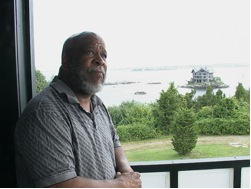 I had the pleasure of meeting a modern day healer from New York a couple of years ago. For the purposes of this essay, I’ll refer to him as Larry which coincidently enough just happens to be his real name. He had come, along with a couple of his students, to Duncan’s studio lab to participate in an interview to be used in an upcoming video production. When introduced, I was confronted by a middle aged heavy set black man who I’m sure sensed my skepticism about the whole healing process. I had been diagnosed a few years earlier with late stage emphysema resulting from many years of smoking, but what followed changed my mind about healers and my only regret was that we had but a limited time to work together. His method employed only focused intent and required no physical contact with the subject. During my first session with him we sat face to face for approximately 45 minutes during which he concentrated on dealing with my lung problems. His effort generated a hot spot on my back twice. That warmth was enough to produce a large damp spot in the middle of my back. He told me that he’d repeat the process later which he did. For our second session (and unknown to him) I had rigged up an ultrasonic field in the studio lab which was sampled and connected to a tone generator. Each time he focused his intent on me, the tone generator’s pitch varied slightly in response. At the conclusion of this session, my breathing had improved somewhat and remained so for a couple of days. It would appear that his concentration of mental focus was also of high enough intensity to modulate the ultrasonic field as well. Was I healed? No. Was my physical situation altered? Yes, at least during that session and for the couple of days that followed our encounter. His efforts demonstrated the radionic art at its best and opened my mind to the subject of healing.
 worshipped just about everything that swam in their waters, grew in the soil, or ran around on top of it. These same Indians (as a child I never played cowboys and Native Americans) lived a life which demanded gratitude and respect for the gifts that nature provided and thus they worshipped nature and those gifts fervently. And so, these treasures handed down by primitive people; willow for aspirin, foxglove for digitalis, and mushrooms for audio-visual special effects, remain with us to very this day helping to make our wretched lives a bit more bearable. On the down side, they also used tobacco, an addiction which granted me the gift of emphysema. Nobody’s perfect I guess.
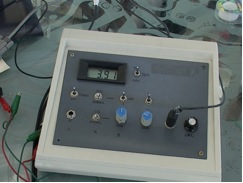 The Wheatstone bridge which I developed for use with human subjects was later adapted for use in the study of plant intelligence and both models share some common features. Of course, both utilize a meter on the panel to provide visual indications of measurements as well as a rear panel output of isolated signal voltages for feeding to a computer the information needed to produce charts. Additionally, an audio oscillator produces tones which follow the fluctuations of the signal values. These voltages and tones were used in many of Duncan’s studio productions of plant generated music. The bridge used for human measurements also includes a tracking white noise generator whose varying volume level proves especially useful in biofeedback experiments.
 As we’re beginning to see, the body provides a variety of signals which can be used in the study of radionic phenomena. I can’t overemphasize the importance of safety when connecting the body to anything electrical. There are many opportunities to become incinerated when one fails to respect the power of electricity and this can spoil one’s afternoon. I have a few suggestions regarding the safety issue:
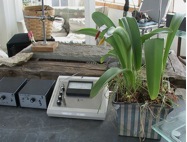 Connections to the plant can be made in several ways. The easiest method of connection is by the use of sticky surface electrodes similar to those used by EMT personnel. Ask your local emergency medical team what they use and see if there is an avenue available for you to get some. These are easily applied to the leaf surface and may be applied either as a pair to a single leaf or one each on two leaves. These lend themselves nicely to the use of the Wheatstone bridge. Plant responses can also be measured with a sensitive milli- or micro- voltmeter. Other areas of measurement may be used by placing a metallic rod in the soil and measuring between the rod and leaf surface. Slipping a pin electrode beneath the bark layer gives yet another location for grabbing signals. We have to remember that whenever moist pads or metal electrodes are used for plant contacts, that small voltages are created by virtue of the fact that the dissimilar conductors can behave like little batteries. These voltages must sometimes be factored out when measurements are made. From our own experiments with plants, the Wheatstone bridge is by far the most likely to give results and has been the instrument of choice for experimenters like Cleve Backster. The galvanic skin reaction which acted as the basis for Backster’s polygraph work is just as effective when studying plants.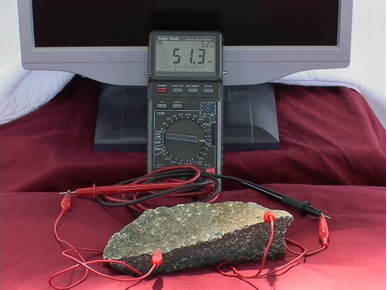
 I have to state here and now that I’ve been witness to a couple of folks who did some interesting mental gymnastics with ESP. One was a young fellow I met in the early 80’s, a very kind, intelligent man who was unfortunately afflicted with severe and chronic alcoholism. He had told me on several occasions that he had been able to “read” his sister’s mind and that they had been very close as young children and shared that ability. She had taken her own life a few years earlier, an experience which further contributed to his drinking problem. He remained curious about their ESP experience and told me that they had played a game using cards; she’d choose a card and he’d try to guess it. His description of the game indicated that he guessed correctly much of the time; way too much of the time. It sounded to me as if a children’s guessing game was far from scientific and so I set up an experiment using a deck of playing cards but we had very little success with it. I did notice that on those occasions when he chose the correct card it was always a number card and not an ace or face card. As a matter of fact, he never did guess a face card in any of our experiments. The simple act of writing the number “1” with a marker on the ace woke it up and allowed its use as a number card. I modified the game so that I used only the number cards of the same suit and concealed the ten cards in a large paper bag. Choosing a card and looking at it through the bag’s open end, I’d concentrate on it and he’d make his guess. He chose correctly nearly 20 percent of the time which was beyond remarkable. I even placed a cardboard carton over the bag of cards and chose the card by peeking through a narrow flap in the carton with the same results. When I used cards of different suits, he still chose the numbers as before but nearly never could he guess the correct suit. Intoxicated or sober, blindfolded or not, his results were always about the same. When it was my turn to guess, I never achieved more than the anticipated 10 percent, and usually less. We tried several variations of the game over a period of a year or so using colors, shapes, and images, but it appeared that his ability was limited to numbers. I’ve never seen anyone duplicate that achievement. Sadly, his life was also cut short by his own hand in December of 1983.
 A green-shaded bankers’ lamp illuminates his roll top desk behind which a half-acre or so of bookshelves offer him leather bound editions of his favorite reference books. With a flourish, those freshly flexed fingers begin their journey across the keys of his freshly oiled Underwood typewriter, a journey already fixed in his mind, one which will reflect his impeccable preparation and dedication to the literary arts. He’ll carefully create a foreword, which will guide his readers into the subject of discussion and deliver a clearly defined map of his thoughts for them to follow through his text. The man is a master of his craft. He begins.
 I’ve assigned myself the task of writing a short foreword introducing the subject to be covered by the essay that follows. Unlike my Cardigan clad friend described above, I’m sitting in a plastic office chair before a cheap IKEA assemble it yourself particle board desk. My current attire consists of a pair of boxer shorts, black, with stylized orange bats all over them. I really didn’t know they were bats until I got them home and put my glasses on but I’m OK with bats so it’s no big deal. (Photo on request.) My weapon of choice is a nearly decade old Windows computer whose operating system has developed a mind of its own of late, and occasionally demands a restart to relieve its Alzheimer’s symptoms. The successful completion of my self appointed task is further complicated by the fact that I have no idea in Hell where this essay will lead. Unlike my organized Underwood owner friend, it’s almost a certainty that you the reader and I the writer will discover the path this essay takes together. By now, you’ll have noticed that nowhere have I mentioned anything about radionics in the foreword, nor do I intend to. That is one of the privileges of being the author. Let’s just get started; fasten your seat belt and lock your tray table in the upright position.
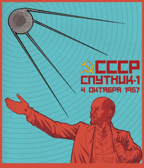 By this time you’ve probably observed that my interests were encouraged and nourished by the efforts of others, many others, and this is how it should be. Once helped and mentored, we are obligated to do what we can to help bring others along when they express similar interests. Age 16 was a milestone for my interests with the gaining of my first ham license in July of 1957 and the launching by the Soviet Union of the Sputnik satellite that October. I saw Sputnik (or perhaps its booster) pass overhead. I heard its “beep, beep”, beacon on a shortwave radio on 20 MHz. Jeeeezus!! These events were my first “eureka moments” in technology and directed my interests forever after. Today we’re more than a half-century removed from those events and vacuum tubes, except for some special purpose types, are pretty much relegated to the bone yard as are those of us who relied on them. Now we have over 500 channels of television to choose from, millions of web pages to peruse, and electronic games to save us from the physical exertion of the real thing. Our world has become sterile, but maybe, just maybe, something will happen to attract the interest of some sixteen year old and give him or her the same thrill that I had listening to those first few feeble seconds of Sputnik’s voice as it heralded a new era of exploration. Consider this for what it’s worth: from the first powered flight of the Wright brothers to the lunar landing, only 66 years transpired. What a thrill it must have been to have witnessed and remembered both of those events within one’s own lifetime, and there were many who did just that.
 A spider has taken up residence in my room. He/She has chosen a fairly protected spot in a corner where the ceiling and wall join, a location safe from the end of my vacuum cleaner and dust rag. In fact in order to get at him/her I’d have to remove the rug attachment from the machine, which is a pain in the rear end and so, I do my housekeeping chores and take the occasional futile pass by his/her web/nest. The attachment is just a bit too large to get into that corner spot and I chalk it up to a bit of Darwin-esque good fortune on the spider’s part. I suspect that to be true since I have successfully sucked up many not as well protected spiders into the Hoover vortex of doom along with countless dust mites, fly carcasses, and lint balls. It seems to me a waste of time to dismantle the instrument of death for just one spider, so for now his/her voluntary act of selective adaptation assures his/xx its survival in my little room and as of this writing the guest arachnid remains unsucked. You’re probably wondering by now exactly what all of this has to do with radionics and I have to admit that I’ve momentarily lost track of things myself. You’ll just have to be patient while I take a moment or two and sort all of this out. This might be a good time to grab a drink and a snack. OK, back to our spider. It’s pretty safe to say that the survival of our eight-legged friend was in no way due to any conscious effort on its part so to do. It was merely the luck of the draw that so many perished in my tornado of death while he/she was allowed to survive and flourish in that little web. Evolution played no part here and neither did intellect. There were no spider oriented reference books describing how best to choose a nesting site nor did a doting parent take the little spiderling on one of its eight knees and explain that location, location, location, is everything. Young spiders, like human adolescents, have to learn everything the hard way and in common with most adolescents, spiders seem motivated only to eat and breed. My spider sees the television set running from across the room and its many eyes absorb many times the visual content that human eyes would, but I’m certain that if polled, my spider would display no product or brand name preferences or political leanings resulting from the nearly constant barrage of commercials and commentary. Further, I don’t think that spiders have hopes, dreams, or even a basic appreciation of past and future. No consciousness or self-awareness permits it to awaken in the morning and declare “hey, I’m a spider and today I’m going to be the best spider that I can be.”
  It can only follow in the eight leggedy footsteps of its ancestors and dedicate its bland existence to finishing that damned web and producing hundreds of tiny offspring which I’m certain will hatch some morning and scare the crap out of me. The next sound you hear will be the vacuum cleaner!
  When we sleep that wonderful processor scales down our physical activities, directs our healing needs, entertains us with dreams, and makes sure that we don’t wet the bed (very often). Even in this standby mode the brain is ever vigilant; ears hearing, nose sniffing, always ready to awaken and respond to any threatening change in our environmental status. The body can be prepared by an internal program for flight or fight at a second’s notice. We can sustain injuries and the brain will reduce blood flow to affected limbs and organs wherever possible. Self preservation at its best! All of this computing capability is estimated by some to consume the equivalent of 4.5 watts of electrical power. Oh, lest we forget, there is the small matter of memory. We’re endowed with a memory that for many folks can store decade’s worth of information and experiences. I can instantly call up one of my first memories of an uncle tossing me around while celebrating the end of WW2 in 1945 (I was four years old). Horns blew, bells rang, whistles sounded, and chaos in general ruled that day. I can recall my first day of school in 1947, pets that I had, the living room radio (a Philco), and sounds, sights, and smells dating back 65 years or more. Some memories are in color, some monochrome. I wonder how much “ram” an electronic computer would require to store that much information. Now (at the age of 70) there are some memories, which have faded over time, some deleted by trauma, and some as fresh as they were at the time they were made. But the miracle of memory itself pales when we consider what we can do with it, and the portals, which open when memory and consciousness join forces.
 Yes, I’ll have the fries because I remember that I had them once before and they were freaking awesome. My choice maximizes my potential for an enjoyable fast food meal. The alternative to this method of selection would be a dart thrown at the words “yes” and “no” or the tossing of a coin. Choice can also have dire consequences when misapplied. I don’t think I’ll wear that motorcycle helmet today… or… let’s do it just this once without the condom. Anyway, it all boils down to privilege and responsibility. Yes, the freedom of choice is a precious gift tempered by the responsibility of accepting the consequences in the event that we make the wrong one. The power of logical choice is one of the things, which make us human. The choice we make, be it path A or path B in social settings establishes us as individuals; we don’t all make the same choices. When enough of us make the “right” choice then society as a whole succeeds. Enough “wrong” choices can trigger our drift toward oblivion. Gazelles have never learned that it’s dumb to drink their water from the place where the crocodiles hide. The immensity of their numbers has helped to protect them from extinction. This characteristic is one that they share with my spider. Humans however, may be the first species allowed to make voluntary choices, which might lead to our eventual destruction while the so-called lower life forms enjoy a measure of protection based upon a pre-programmed physiology and the denial of conscious choice. Let’s come back in a million years or so and see who is still at the party.
 The road to Hell is paved with good intentions. I think I read that on a wall tapestry somewhere, and if the daily news stories on my television set are any indication of the condition of that road, then we are in the midst of a major re-surfacing project. Consciousness becomes an active process when we enter the world of intent. I like to think of intent as the conscious and deliberate act of cocking a gun which we’re preparing to fire. Intent is a powerful example of consciousness; we’ve considered what we are about to do and we’ve prepared that weapon for firing. Only the act of pulling the trigger remains. We’ve reached a point where a choice, based upon our understanding of the benefits or possible consequences, can be made resulting in something we shall do in the short-term future, or the immediacy of something we WILL do now. In other words, we’ve momentarily bypassed many of our brain’s current activities and focused our conscious energy into the execution of a single powerful thought process, one that could result in a physical action. We are now in the “warp drive” of conscious effort concentrating as much of our brain’s resources as possible to this single packet of thought, this willful and focused intent. Welcome to radionics. Oh yeah, BANG!
 Some practice the craft using nothing at all while purists might choose a divining rod of hickory or willow wood. In most cases, the dowser records a “hit” when his hand or his rod is pulled downward signaling that he is over a water source or anomaly in telluric energy. I’ve seen this method used several times and frankly I don’t understand how it works. Students of the craft believe that subtle energy emanates from the earth above sites rich in water and the variations in the strength of these emanations can give an idea of the depth of the aquifer to those having the gift of that sensitivity. I had an opportunity to observe a diviner in action and rested my hand on her forearm as she worked. Her arm tensed as she passed over what she considered to be a source and I could definitely feel a flexing of her muscle when she recorded a hit. She also used metal rods, which registered hits when they turned from parallel alignment to a crossed configuration. This did not result in any muscle action that I could detect, and when it became my turn to have a go at it, I failed miserably. Some dowsers are able to work their magic by dowsing over a map using a pendulum or stick thus remotely locating water sources. I’m pleased to recommend an excellent book describing the career of an American practitioner who pushed the envelope of the craft to its limits:
 I sometimes wonder if we (and the rest of life in general) might have been better off had we remained at the knuckle dragging stage when a hot date consisted of harvesting lice from each other’s backsides on a Friday night with our newly evolved opposable thumbs. But evolution, being what it is, could not leave well enough alone and in walked Homo sapiens, man, with his hat on backwards, his hand in his pants, and a boom box on his shoulder. Hands up if you think that evolution might have hit a bump in the road here. This would be my proof that God does indeed have a sense of humor. Enough of that!
 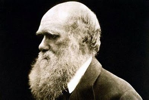 Vinny and Doreen showed up as the first examples of man v.1.0. I don’t want to wax biblical here, so we can either believe that God created them instantly, that they evolved from some manner of narcissistic great ape, or that aliens, sick of their intergalactic back seat driving dropped them off in the African Rift Valley. Believe what you will, the choice is yours. Personally, as a devout former Catholic, I tend to believe that the forces of evolution by natural selection were the most powerful and majestic tools given by God to insure the success of his creatures. Maybe that’s why I’m a Hell bound, terminally excommunicated Catholic but that’s another story entirely. I truly feel that Charles Darwin got it right and we’ll take a break here with one of his quotations, which seems to sum the whole thing up.
  For the record, Doreen proved so irresistible that Vinny reformed and began dating only within his own species. Night after night they sat on a rock admiring each other’s wonderful opposable thumbs and inventing new uses for them in the pursuit of whoopee. Generation upon generation of these terrestrial newcomers played house, multiplied, and developed little bits of technology to prevent themselves from being eaten, freezing to death, or dying young. They made shelter, clothes, and campfires, hunted game when they could, and ate what they found in the forest. Nature offered them pretty much the same risks and benefits that she offered the rest of her creatures, and these hunter gatherers lived a nomadic life pretty much in sync with her laws. Nature’s intelligence dictated that life for them would be difficult (and short) but that a manageable population could thrive in concert with the rest of the plant and animal kingdom and that she would provide an adequate level of nourishment for them. In other words, mankind could, in a co-creative relationship with nature, establish a flourishing though simple lifestyle while maintaining the environmental and ecological balance that Mother Nature demanded. The Vinnys and Doreens of this world would live on a par with the rest of the creatures; no better off, no worse. This hardscrabble utopian lifestyle skidded off the track at about the same time that Doreen read of the luxuries described between the covers of “The Neolithic Times”. Her lust for real estate and the concept of community property soon had the happy couple redefined as farmers, landowners, and ultimately villagers. I think you all know what happened next.


